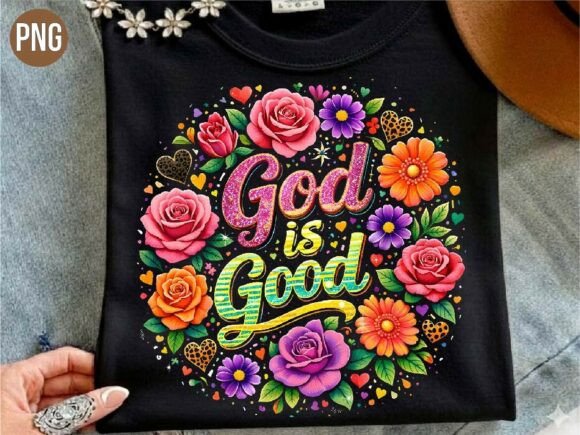
God is Good Christian Floral PNG T-shirt
A Designer’s First Look: Warm, Welcoming—But Not for Every Hoop
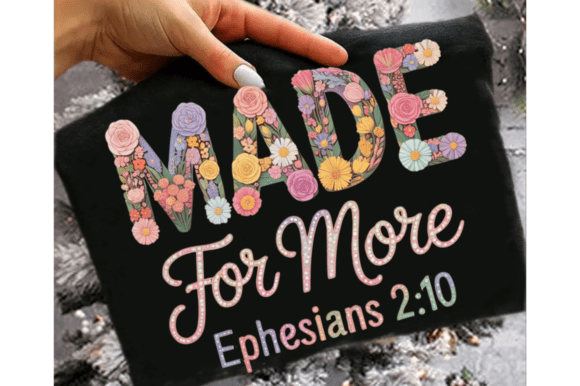
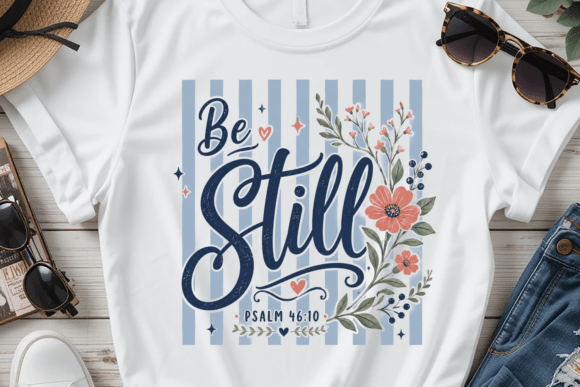
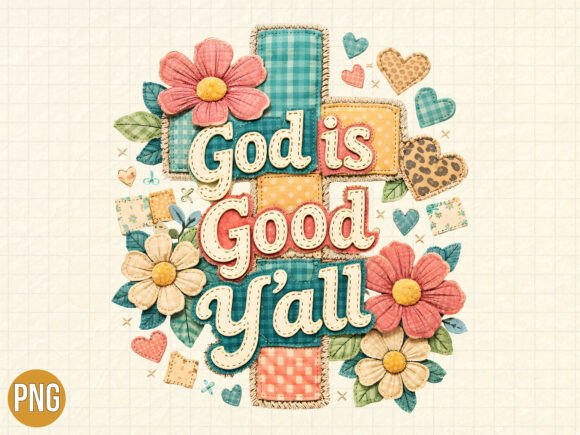
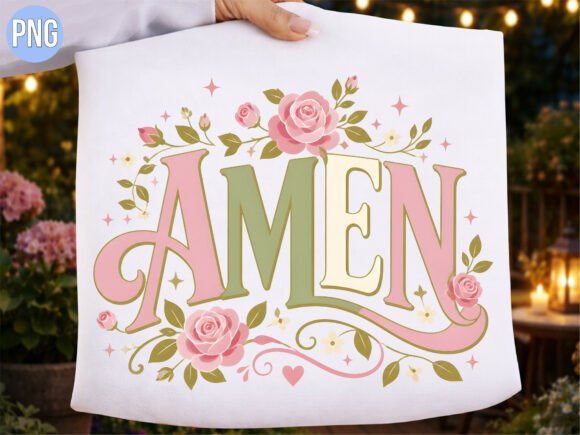
When I opened God is Good Christian Floral PNG T-shirt, my first thought wasn’t “cute” or “trendy”—it was “this feels like a hug in stitch form.” The composition balances reverence and softness: a centered phrase in gentle script, framed by loose, asymmetrical florals—roses, ivy, and subtle sprigs—that breathe without crowding the text. It’s not overly ornate, but it’s not minimal either. That middle ground makes it versatile—but also demands intention. I immediately pictured it on a linen-cotton tea towel for a church bazaar booth, or stitched onto the chest of a cream-colored baby onesie for a baptism gift. Not flashy. Not fussy. Just quietly meaningful.
Where It Shines: Real Projects, Real Reactions
I tested God is Good Christian Floral PNG T-shirt across three actual small-batch projects: a medium-weight organic cotton tote bag for a local women’s ministry, a lightweight unisex sweatshirt for a faith-based retreat, and a set of embroidered kitchen towels for an Etsy shop launch. In each case, customers responded to the design’s sincerity—not just its message, but its *execution*. On the tote, the floral elements softened the garment’s utilitarian feel; on the sweatshirt, the balanced negative space kept it from looking heavy or dated. Most telling? A customer emailed asking if we offered matching pillow covers—proof that the design reads as part of a cohesive, thoughtful collection, not just a standalone graphic.
This isn’t a design that shouts. It invites. That makes it ideal for personalized gifts (think: anniversary aprons, holiday stockings, nursery wall hangings), boutique merchandise where brand voice matters more than volume, and handmade products where buyers pay a premium for intentionality. As an embroidery file, it translates well into satin stitch for lettering and layered fill stitch for petals—no excessive jump stitches or fragile thread bridges. It holds up cleanly at 3.5–4 inches wide, which fits comfortably on most standard hoops used for custom apparel and embroidered patches.
Where to Pause—and Why
That same gentleness becomes a limitation in certain contexts. On thin or highly stretchy fabrics—like ribbed knit tees or lightweight baby bodysuits—I recommend extra stabilizer and possibly simplifying the outermost floral elements in your embroidery software before stitching. Dense fill areas near the flower centers can shift on unstable substrates, especially during hooping or washing. And while the script font is legible at 3 inches, I wouldn’t push it below 2.75 inches without checking how the satin stitch wraps on your machine—tiny curves in the “G” and “d” could blur.
Caps and curved surfaces are tricky. The design’s horizontal flow works best on flat or gently contoured areas—so it’s strong for front-chest placement on sweatshirts or tote bags, but less ideal for the crown of a structured cap unless resized and re-digitized for curvature. Also, on dark fabric, contrast depends entirely on your thread choice: light ecru or pale gold threads elevate the warmth, but stark white can read clinical rather than comforting. Always test in black-and-white mockups first—what looks balanced on screen may lose hierarchy when stitched.
Practical Notes Every Embroidery Designer Should Keep Handy
- Test before committing: Run a sample on scrap fabric matching your final substrate—especially for baby embroidery or holiday embroidery where texture and wash durability matter.
- Stabilizer strategy: Use medium-weight cutaway for knits, tear-away for stable wovens like tea towels or pillow covers. Skip the fusible unless you’re confident it won’t gum up delicate floral details.
- Thread color pairing: Try muted sage, dusty rose, or warm charcoal instead of primary reds or bright pinks—the design’s strength is its quiet confidence, not contrast shock.
- Hoop size check: Confirm the design fits your most-used hoop without scaling. If it’s tight at 4”, consider whether your commercial embroidery workflow allows for quick re-hooping mid-project.
- Licensing clarity: Since this is listed under T-Shirt Designs, verify whether the license permits resale of finished embroidered items (e.g., on Etsy) or only personal use. Many digital embroidery files restrict commercial embroidery without add-on licensing.
- Mockup realism: Drop the PNG into both light and dark printable mockups—not just one. Does the floral density hold up visually on black fabric? Does the script still feel grounded on ivory?
What This Design Says About Your Brand—Without Saying a Word
Using God is Good Christian Floral PNG T-shirt signals care—not just in message, but in craft. Customers notice when lettering is smooth, when petals don’t look pixelated or over-stitched, when spacing feels intentional rather than automated. That perception directly lifts perceived value: a $28 embroidered tote with this design sells more consistently than a flashier, busier alternative at the same price point. It builds trust because it doesn’t overpromise. It fits seamlessly into a small shop product lineup alongside scripture-themed tea towels, baptismal blankets, or wedding guest favors—never clashing, always complementing.
For Etsy sellers and creative entrepreneurs, it’s a low-risk, high-resonance asset. It converts well in search terms like “Christian embroidery design,” “floral faith tote,” or “gentle scripture patch”—but more importantly, it retains buyers. People return not just for the message, but because the finished product feels *made*, not mass-produced. That handmade presentation—clean edges, balanced density, thoughtful scale—is what turns a digital embroidery file into a signature piece for your craft business.
Final Thought: Purpose Over Pixel Count
You won’t find wild technical specs listed here—no stitch count, no guaranteed hoop compatibility—because those numbers mean little without context. What matters is how God is Good Christian Floral PNG T-shirt behaves when you load it, hoop it, and stitch it into something real. It’s a design that rewards attention: to fabric choice, to thread nuance, to the quiet weight of meaning carried in line and petal. Use it where warmth matters more than wow—and where your customers aren’t just buying a phrase, but a feeling they want to hold, wear, and share.