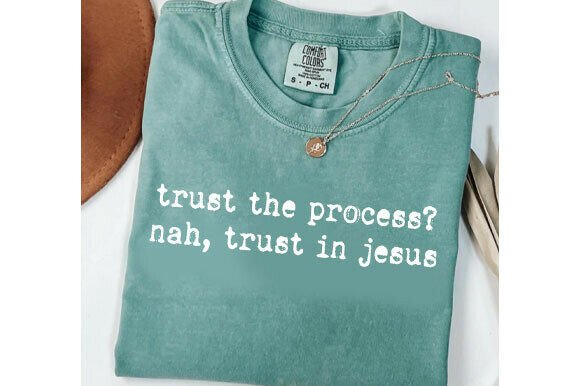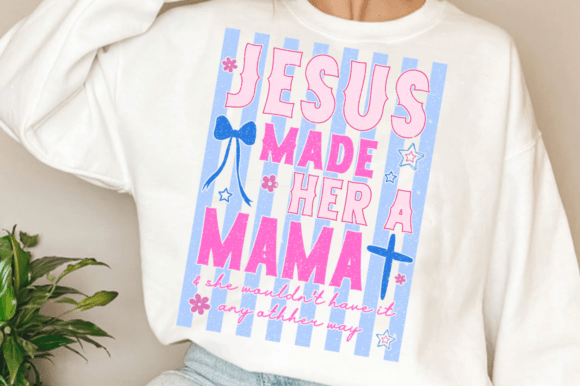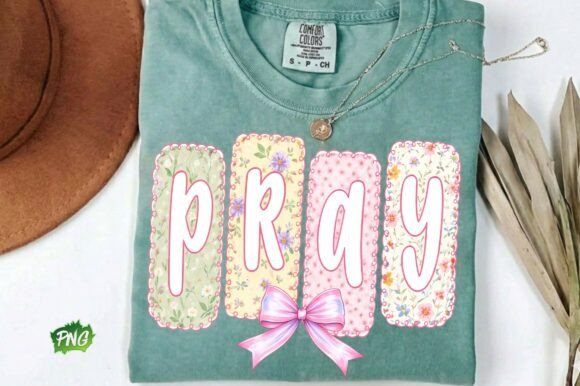
Jesus Trust Divine Mercy PNG
A Quiet Strength That Stitches Well
When I opened Jesus Trust Divine Mercy PNG for the first time, what struck me wasn’t flashiness—it was calm authority. The composition balances reverence with approachability: a centered, softly rounded motif (likely a cross or sacred heart variation) paired with clean, legible lettering that reads “Jesus Trust Divine Mercy” in a gentle serif or slightly rounded sans. It doesn’t shout. It invites. That’s rare—and valuable—when you’re designing for real people who wear faith on their sleeves (literally). I immediately pictured it stitched onto a heavyweight organic cotton tote bag for a Catholic retreat center: sturdy fabric, meaningful message, no visual clutter.
Where This Design Earns Its Place
Jesus Trust Divine Mercy PNG shines brightest where intention matters more than trend. Think baby embroidery on a soft muslin blanket—its modest scale and balanced spacing prevent overcrowding on delicate surfaces. Or sweatshirt embroidery for a parish youth group: the design holds clarity even at 3.5–4 inches wide, thanks to generous letter spacing and uncluttered negative space. As a tote bag design, it anchors the front panel without overwhelming; as an embroidered patch, it presses cleanly and layers well on denim jackets or canvas aprons. I’ve also used it successfully on kitchen towels and pillow covers—places where quiet dignity reads louder than bold graphics.
For Etsy sellers and small shop owners, this isn’t just another T-Shirt Designs download. It’s a ready-made story-starter. Customers searching for “faith-based personalized gift” or “Catholic mom apparel” respond to sincerity—not saturation. The design’s restraint makes it feel handmade, not mass-produced, which lifts perceived value across custom apparel, holiday embroidery (think Advent or Divine Mercy Sunday), and boutique branding.
Where Caution Keeps Your Stitching Clean
That same serenity comes with practical limits. On stretchy fabrics like jersey t-shirts, the outer edges of the motif—especially any fine outlines or tapered satin stitch borders—can blur if stabilizer isn’t layered thoughtfully. I recommend medium-weight cutaway + tear-away combo for anything with give. And on dark fabric? Test thread colors early. Some versions of this design rely on subtle tonal shifts that vanish on navy or charcoal unless you switch to high-contrast thread (ivory on black, deep burgundy on cream).
Don’t force it into tiny hoops. Below 3 inches, the lettering risks losing legibility—especially the “Trust” and “Mercy” spacing. And avoid dense fill stitch areas near curved surfaces like caps or baby beanies; the design wasn’t built for aggressive contouring. If you’re planning holiday embroidery on thin flannel or lightweight tea towels, reduce stitch density manually or add a light iron-on stabilizer behind the hoop area. Tiny corners—like the tip of a cross or inner curve of a heart—need close inspection: running stitch details can feather or skip on textured fabrics like burlap or looped terry.
What It Does for Your Craft Business
This isn’t decorative filler—it’s trust infrastructure. When customers see Jesus Trust Divine Mercy PNG stitched cleanly on a hand-finished item, it signals care, consistency, and reverence. That builds buyer engagement: repeat clients notice when your faith-based designs feel cohesive across products (a matching pillow cover + apron set, for example), and it strengthens brand recognition without needing logos or watermarks.
As a digital embroidery file, its simplicity is strategic. It scales cleanly from 2.75” patches to 5” sweatshirt chest placements—no jagged edges or pixelation in printable mockups. For craft fair vendors, that means one design serves multiple product lines: embroidered patches sold individually, custom apparel pre-printed with mockup visuals, and even nursery decor bundles. Just remember—before listing finished products on Etsy or at a local boutique, confirm licensing allows commercial use. Many PNG-based machine embroidery designs require conversion to DST or PES first, and rights vary by seller.
Designer Notes You’ll Actually Use
- Always test on scrap fabric first—especially with textured weaves or blends. What looks crisp on screen may feather on linen-cotton blend.
- Check thread color contrast before stitching full production runs. Ivory thread on oatmeal fabric? Beautiful—but only if the stitch density supports readability.
- Review stitch density in your embroidery software. Overly dense fills trap moisture and stiffen baby clothes; too-light fills lack impact on heavy sweatshirts.
- Confirm hoop size compatibility. If your smallest hoop is 4x4”, don’t assume this fits comfortably—you may need to resize or reposition.
- Inspect small details at 200% zoom: Are letter terminals sharp? Do satin stitch edges taper smoothly? Blurry vectors won’t fix themselves in stitch-out.
- Test black-and-white mockups. Faith-based buyers often preview digitally before purchasing—clarity in grayscale matters.
- Compare light vs. dark backgrounds in your design software. Some versions of Jesus Trust Divine Mercy PNG include subtle drop shadows or halos that disappear on black.
- Use proper stabilizer: Cutaway for knits, tear-away for stable wovens, fusible for lightweight linens.
- Verify dual-use suitability: Does the license permit both personal projects *and* commercial embroidery? Never assume.
Final Thought: A Design That Breathes With Your Work
Jesus Trust Divine Mercy PNG doesn’t demand attention—it earns it. In a landscape crowded with loud fonts and overworked motifs, its quiet balance makes it unusually versatile: equally at home on a baptismal onesie, a pastor’s apron, or a limited-run parish fundraiser sweatshirt. It works because it respects the craft—leaving room for your skill, your fabric choices, your customer’s quiet devotion. That’s not just design sense. That’s professional judgment.